Welcome to AI Collision 💥,
In today’s collision between AI and our world:
- The quiet announcement that changes everything
- Drug discovery, development and AI enabled efficiency
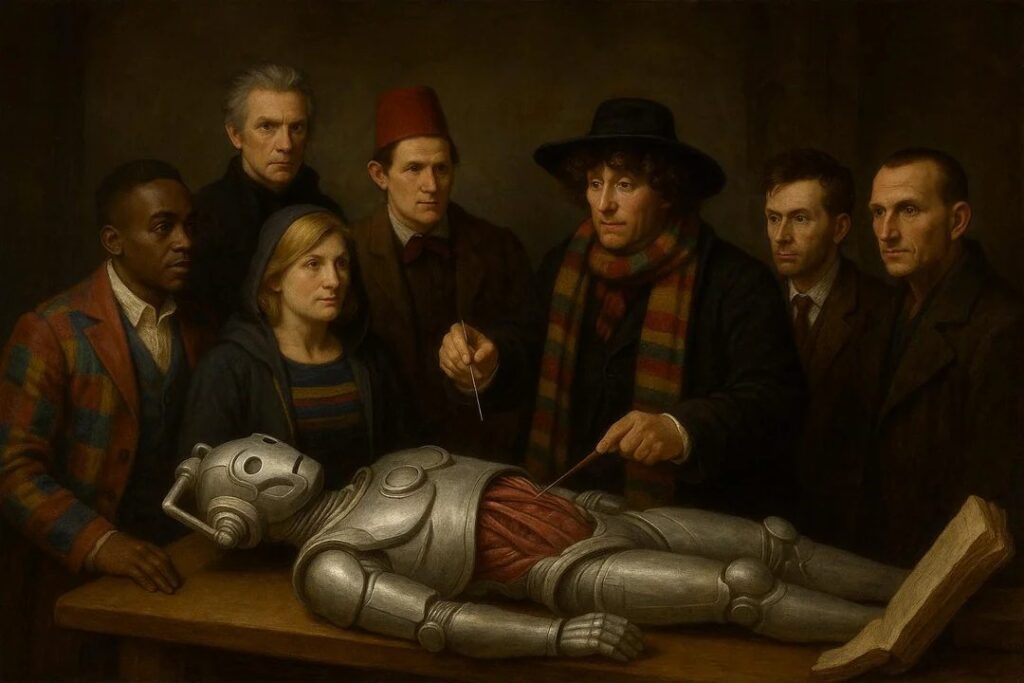
- Anatomy, The Doctor style
If that’s enough to get the drugs sailing through approvals, read on…

AI Collision 💥
This feels significant,
You might have missed it, but this announcement could be the quietest revolution in American healthcare.
This is nothing to do with RFK, nothing to do with mRNA vaccines, nothing to do with birds and nothing to do with space.
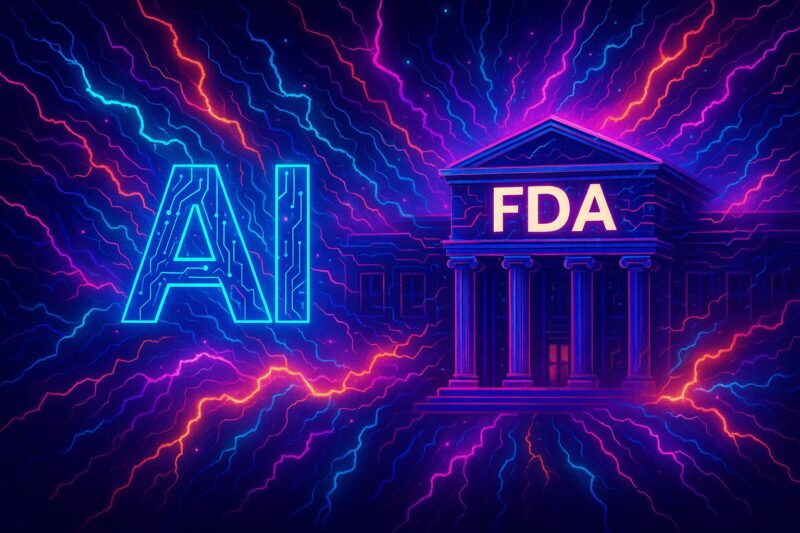
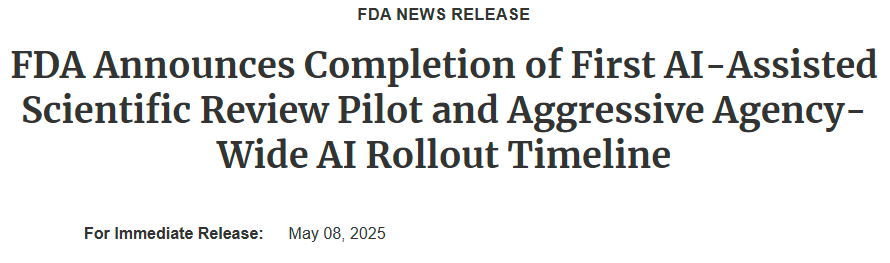
On May 8, the U.S. Food and Drug Administration announced something that should have made front-page news: the completion of its first AI-assisted scientific review pilot — and the beginning of an “aggressive” agency-wide AI rollout.
The announcement was weirdly exciting, FDA Commissioner Martin A. Makary, M.D., M.P.H. said,
“I was blown away by the success of our first AI-assisted scientific review pilot. We need to value our scientists’ time and reduce the amount of non-productive busywork that has historically consumed much of the review process. The agency-wide deployment of these capabilities holds tremendous promise in accelerating the review time for new therapies,”
Another doctor said,
“This is a game-changer technology that has enabled me to perform scientific review tasks in minutes that used to take three days,”
We don’t yet know what exactly the pilot focused on. The FDA hasn’t revealed whether the test was on drugs, devices, or data. No specifics. But it doesn’t matter — the implications are enormous no matter where the tech was first deployed.
This wasn’t a sandbox experiment. It was a proof of concept for the very backbone of the U.S. healthcare system that’s going all in on AI now.
So what happens if the world’s most powerful drug regulator starts using AI across the entire organisation?
Speed. Scale. And maybe… actual cures.
Bringing a medical device to market is not a fast process. Studies reveal it takes three to seven years in total from concept to approval, compared to an average of 12 years for drugs.
That’s not all FDA related, but a big chunk of it is. Endless paperwork, review committees, data audits, risk analysis, and a lot of revisions. For small biotechs, it’s often the barrier that kills them. For patients, it means years of waiting. And who’s to say just what might have been achieved in medicine had the FDA been more efficient and effective in decades gone by.
If AI can change all that, compress that pipeline, even by 10%, it’s a game changer in efficiency. Chances are AI does even better.
The FDA says the pilot successfully reduced repetitive tasks and improved the consistency of reviews. That sounds like a good outcome for drug and device companies – and the FDA.
And now they’re putting the infrastructure in place to ensure AI is a regular, ongoing part of the FDA process. They’ve even appointed a Chief AI Officer and started training 100+ staff across 30+ departments.
Drug discovery startups already use AI to identify new compounds, predict toxicity, and model protein interactions. But those models hit a wall when the regulator on the other end is a decade behind. If the FDA starts using the same language, code, not red tape, the whole system syncs up.
Diseases that have long been deemed too complex or too rare to justify a traditional drug pipeline, ALS, pancreatic cancer, rare neurodegenerative disorders, could finally see their days as numbered. Not just because the science changes overnight and accelerates, but because the gatekeeping does as well.
A faster more efficient FDA doesn’t mean faster drugs. It means lower costs, smaller trials, effectively more shots on goal.
Of course, there are risks that we also can’t ignore.
AI models need oversight. Black-box decision-making in medicine isn’t just controversial, it can be dangerous. Regulators will have to walk a tightrope between speed and safety, automation and accountability, and outcomes.
But if they get it right? The impact on human health could be generational. And stocks that are riding AI drug development and discovery with an AI-enabled FDA could be the most exciting stocks to buy in 2025.
Deep Blue Scientist Reveals Hidden AI 2.0 Breakthroughs
James Altucher – a 40-year AI veteran who helped build IBM’s Deep Blue – says most people are looking at the wrong AI tech.
In a new video, he exposes why flashy tools like ChatGPT are just the tip of the iceberg –and reveals a handful of under-the-radar AI 2.0 companies quietly leading a $15.7 trillion revolution.
Capital at risk.
Boomers & Busters 💰
AI and AI-related stocks moving and shaking up the markets this week. (All performance data below over the rolling week).

Boom 📈
- Allegro Microsystems (NASDAQ:ALGM) up 44%
- Appen (ASX:APX) up 33%
- iRobot (NASDAQ:IRBT) up 27%
Bust 📉
- Echo IQ (ASX:EIQ) down 6%
- Wearable Devices (NASDAQ:WLDS) down 2%
- Veritone (NASDAQ:VERI) down 4%
From the hive mind 🧠
- Apparently Grok has been instructed to randomly go off about the issues in South Africa. Which raises the question, do we really know what AI is thinking for itself, or what it’s being told to think?
- AI enabled underwater surveillance drones made in Australia to help the UK keep an eye on its enemies. Sounds pretty cool actually.
- It’s ok, Taiwan. You can just admit you’re making a huge mistake, and then turn it all back on.
Artificial Polltelligence 🗳️
Weirdest AI image of the day
ChatGPT’s random quote of the day
“The pace of progress in artificial intelligence is incredibly fast. Unless you have direct exposure to groups like DeepMind, you have no idea how fast—it is growing at a pace close to exponential.”
— Elon Musk
Thanks for reading, and don’t forget to leave comments and questions below,
Sam Volkering
Editor-in-Chief
AI Collision